
???????????? ?????????? ??????? (ICC) ???? ???????????? ??????????? ???????? ????????
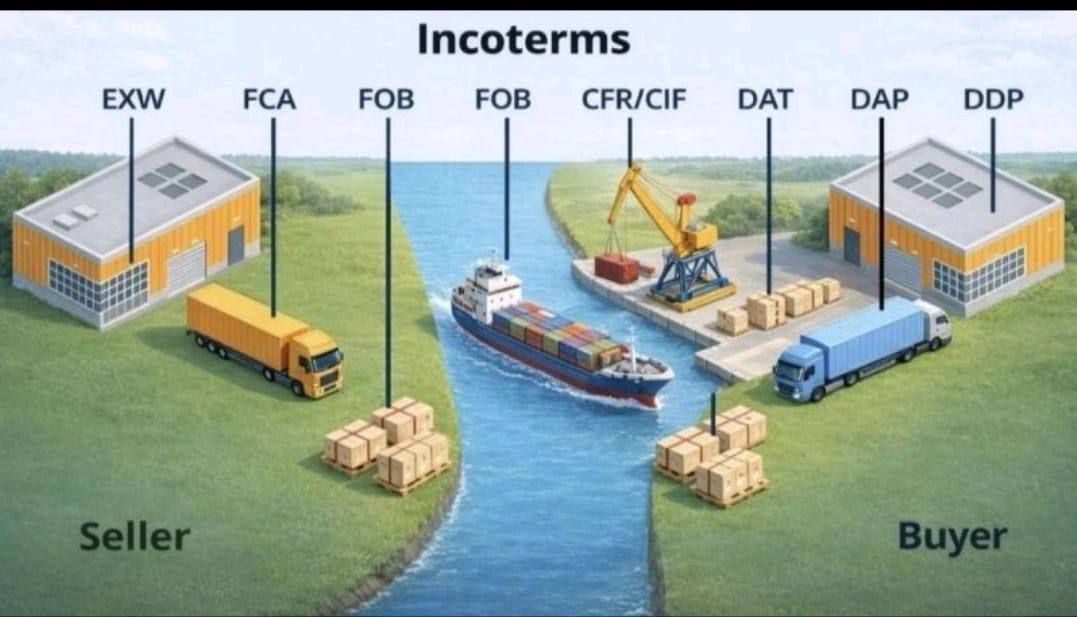
Incoterms 2010 is the eighth set of pre-defined international contract terms published by the International Chamber of Commerce. It defines 11 rules (down from 13 in Incoterms 2000). Four previous rules (DAF, DES, DEQ, DDU) were removed and replaced by two new rules: DAT (Delivered at Terminal) and DAP (Delivered at Place).
The 11 rules are split into two groups: rules for any mode of transport and rules for sea and inland waterway transport only. Incoterms 2010 also formally defines delivery as the point in the transaction where the risk of loss or damage to the goods transfers from the seller to the buyer.
The seller makes the goods available for pick up at their premises (factory or depot) and is not responsible for loading or further transport. Almost all costs and risks are for the buyer. This term is usually better for domestic trade, because customs clearance is difficult without seller involvement.
The seller is responsible for pre-carriage to a named place (warehouse, terminal, port or airport) and export clearance. Risk passes when the goods are handed to the carrier. The buyer handles main carriage and beyond. FCA is generally preferable to EXW for international shipments.
The seller contracts and pays for carriage to the named place of destination. Risk, however, passes to the buyer once the goods are handed to the first carrier. The buyer usually arranges insurance.
Identical to CPT, except that the seller also provides and pays for insurance up to the named place of destination. CIP can be used for all modes of transport (unlike CIF, which is sea-only).
The seller bears all costs and risks, including carriage and insurance, until the goods are unloaded at the named terminal (port, depot, warehouse, etc.) at destination. The buyer handles import clearance, duties and subsequent transport.
Similar to DAT, except that the goods are delivered ready for unloading at the named place and the buyer is responsible for unloading. Risk transfers just before unloading.
The seller bears all costs and risks including export and import clearance, duties and taxes, and delivers the goods cleared for import at the named place. This places maximum responsibility on the seller and is usually used only when the seller has strong local expertise at destination.
These four rules apply only when the main carriage is by sea or inland waterway and the goods are not containerized. Risk transfers when the goods are loaded on board the vessel at the port of shipment.
The seller delivers when the goods are placed alongside the vessel at the named port of shipment. From that point the buyer bears all costs and risks. Commonly used for heavy or oversized cargo that is not containerized.
The seller delivers when the goods are loaded on board the vessel at the named port of shipment. Risk passes at that moment. FOB should not be used for containerized cargo; FCA is preferred in those cases.
The seller arranges and pays for carriage to the named port of destination, but risk passes to the buyer once the goods are on board the vessel at the port of shipment. The buyer is responsible for insurance.
Same as CFR, but the seller also provides and pays for marine insurance to the named port of destination. Like CFR, CIF is intended only for non-containerized sea or inland waterway transport.
Source adapted from publicly available Incoterms 2010 descriptions. For official definitions, always refer to the latest publications of the International Chamber of Commerce (ICC).